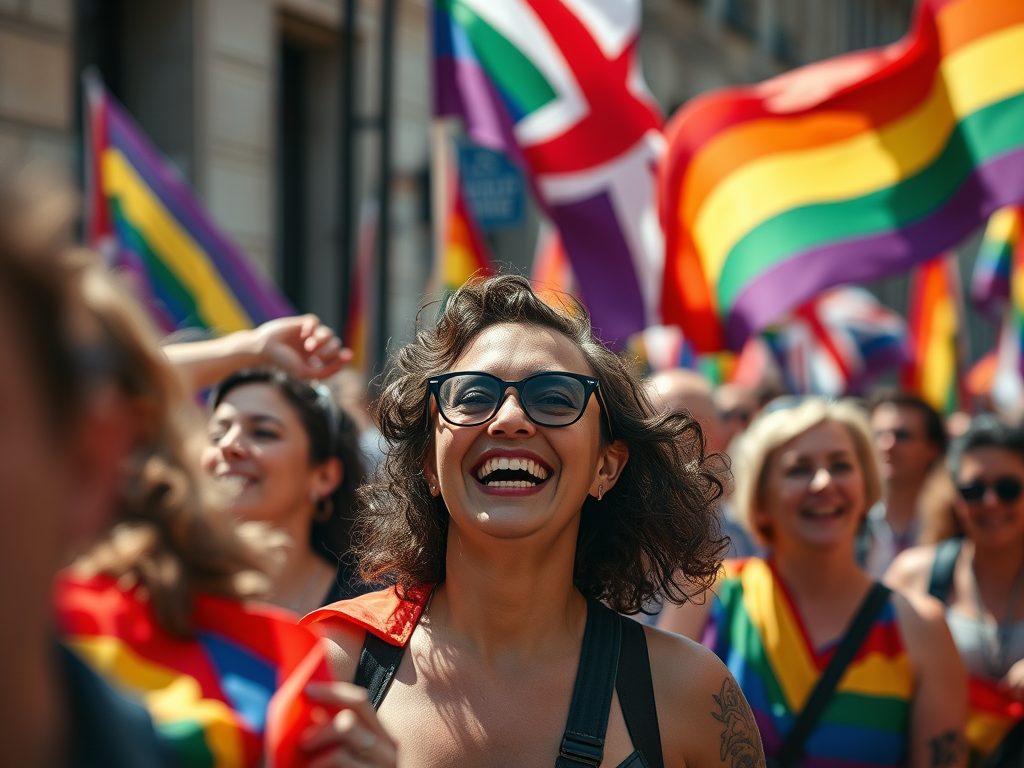
The landscape for LGBTQ+ Pride organisations in the UK and beyond has become increasingly fraught, as shifting political attitudes and the rise of far-right parties reshape the environment in which these groups operate. In recent years, the debate around trans rights has grown particularly intense, with high-profile legal decisions—such as the UK Supreme Court’s 2025 ruling narrowing the legal definition of a woman—further polarising public opinion. At the same time, the growing popularity of parties like Reform UK has led to a more hostile climate for LGBT+ communities, both in rhetoric and in policy.
This political shift is not limited to the UK. In the United States, the re-election of Donald Trump has seen a rollback of diversity, equity, and inclusion initiatives, with his administration publicly criticising DEI as “illegal and immoral” and threatening companies that visibly support LGBTQ+ causes. Globally, countries like Georgia and Mali have enacted harsh anti-LGBTQ+ laws, signalling a broader trend: as far-right movements gain influence, LGBTQ+ rights are increasingly used as a political wedge and a target for reactionary backlash.
One of the most immediate and tangible effects of this changing climate has been a sharp reduction in corporate support for Pride events. Where once major brands competed to sponsor parades and festivals, many are now quietly pulling back. In the US, organisers in cities like San Francisco and New York have reported funding shortfalls in the hundreds of thousands of dollars, as companies such as Mastercard, Pepsi, Deloitte, Anheuser-Busch, and Target scale down or withdraw their sponsorship. The reasons for this retreat are complex: economic uncertainty plays a part, but so does the fear of political reprisal and consumer boycotts in an increasingly polarised society. Many brands now prefer to limit their support for Pride to internal staff events, rather than risk public campaigns that might attract controversy.
The UK is experiencing similar pressures. Some local authorities, influenced by the rhetoric of parties like Reform UK, are increasingly reluctant to fund Pride events. Councillors like Ian Cooper in Staffordshire have argued that taxpayer money should be reserved for “essential services” rather than community celebrations, a view echoed by other Reform UK representatives. This growing reluctance to provide public funding leaves Pride organisers in a precarious position.
The consequences for Pride organisations are stark. Some events have been forced to rely almost entirely on community fundraising and volunteer labour just to survive. At the same time, the increasingly hostile political environment has emboldened anti-LGBTQ+ groups, leading to heightened concerns about safety and a greater need for security, at precisely the moment when resources are most stretched. It is a painful irony that as the need for Pride as a space for protest and solidarity grows, the ability to provide it is under threat.
Liverpool Pride will not go ahead this year, a difficult decision driven by significant financial and organisational capacity pressures within the charitable organisation that runs the annual event, LCR Pride. Our Labour-run council worked closely with LCR Pride in an effort to prevent this outcome, even offering financial and operational support through Culture Liverpool. Despite these efforts, the challenges facing LCR Pride proved too great to overcome this time. While this news is deeply disappointing, we remain committed to celebrating our LGBTQ+ community. We are ready and willing to work with community members to pull together an alternative celebration this year and we are actively exploring ways to help sustain Pride in Liverpool for years to come, ensuring our city has an annual event to be proud of.
Despite the increasingly worrying landscape, it is worth noting for Liverpool that pride organisations nationally and internationally are showing remarkable resilience. Many have turned to grassroots fundraising, creative partnerships, and a renewed focus on the core values of Pride—solidarity, protest, and community—rather than a commercial spectacle. The current climate has, in some ways, prompted a return to the roots of Pride as a movement for visibility and resistance, rather than simply a celebration. However, in my opinion, the need for sustained support from allies—both inside and outside the corporate world—has never been greater. If Pride is to continue as a beacon of hope and resistance for the LGBTQ+ community, it will require not just resilience from organisers, but renewed commitment from the wider public to stand in solidarity against a rising tide of hostility. I know I’ll personally be choosing corporations that don’t turn their back on our community.
 Harry Doyle